Whey Protein with Ashwagandha: Benefits & How to Use
Learn about whey protein with Ashwagandha, its role in muscle recovery, how to use protein powder, and what to know before choosing a supplement.
Whey Protein with Ashwagandha: A Smarter Approach to Everyday Fitness
Building strength is not just about lifting heavier weights. Your body also needs enough protein, balanced nutrition, adequate sleep and consistent training to support muscle repair and recovery. For people who find it difficult to meet their daily protein needs through meals alone, whey protein can be a convenient addition to their routine.
But what happens when whey protein is combined with Ashwagandha and digestive enzymes? Let's explore how this combination fits into a practical fitness routine and what you should know before choosing a supplement.
What Is Whey Protein and Why Does Your Body Need It?
Whey protein is a milk-derived protein that provides essential amino acids. Your body uses these amino acids to maintain and repair tissues, including muscles.
During resistance training, muscle tissue experiences stress. Adequate dietary protein, alongside appropriate training and recovery, helps support the body's muscle-building process.
Whey protein concentrate is one common form of whey. Its exact protein, carbohydrate and fat content varies by formulation, so checking the nutrition label is more useful than judging a product by its name alone.
You can obtain protein from everyday foods such as milk, curd, eggs, lentils, beans, soy, fish and meat. Protein powder is a convenient option when food alone does not comfortably meet your needs.
Why Combine Whey Protein with Ashwagandha?
Ashwagandha is a plant traditionally used in Ayurvedic practices. It is included in some modern wellness and fitness supplements because researchers are investigating its potential effects on stress, sleep and other aspects of health.
However, it is important to separate established nutrition facts from emerging research. Whey provides protein and essential amino acids; Ashwagandha is not a replacement for protein, a balanced diet or a structured training programme. Evidence for Ashwagandha's effects on athletic performance remains limited, and results from studies of particular extracts cannot automatically be applied to every formulation.
A supplement containing both ingredients may appeal to people who prefer a combined formula, but the presence of Ashwagandha does not guarantee greater muscle growth, strength or endurance.
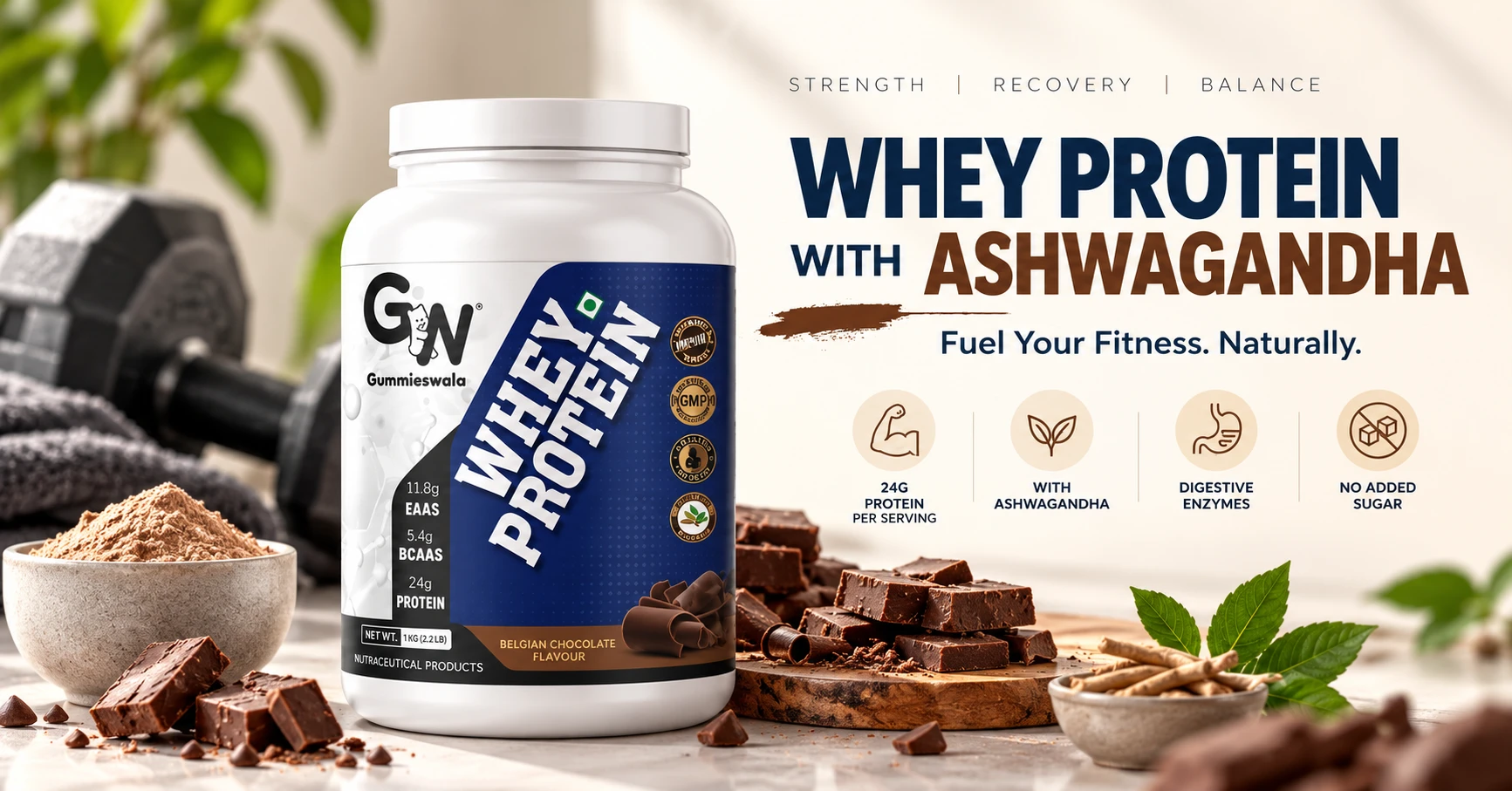
Meet Gummieswala Whey Protein with Ashwagandha
Gummieswala Whey Protein brings together a chocolate-flavoured protein formula and selected additional ingredients in one convenient powder.
Here is what the product information lists:
- Belgian Chocolate flavour: An option for people who prefer a chocolate-style shake.
- Whey protein concentrate: The main protein source.
- 24 g protein per 40 g serving: According to the product's published nutrition information.
- Ashwagandha root powder: Listed at 430 mg per serving.
- Digestive enzyme blend: Listed at 40 mg per serving.
- 25 servings per 1 kg container: Based on the stated 40 g serving size.
- No added sugar: The product page lists monk fruit as a sweetener. No added sugar does not necessarily mean zero total sugar.
These details can help you compare supplements based on serving size, protein content, ingredients and flavour instead of relying on marketing claims alone.
Explore the product: Gummieswala Whey Protein with Ashwagandha
How to Use Whey Protein in Your Fitness Routine
The best time to use a protein supplement is the time that helps you meet your overall nutritional needs consistently. You do not have to rely on a complicated schedule to make protein part of your routine.
According to the Gummieswala product instructions:
- Add one rounded scoop (40 g) to 220–250 ml of water or milk.
- Shake or stir until the powder dissolves.
- Consume it after preparation.
Milk can make a shake creamier and adds extra nutrients, while water offers a lighter option. You can also include protein powder in a balanced smoothie if it suits the product instructions.
Remember that the shake is a supplement to your diet, not a substitute for regular meals. Your total daily protein intake, training programme, sleep and recovery habits matter more than relying on a single product.
Is Whey Protein with Ashwagandha Suitable for Everyone?
No single supplement is suitable for everybody. Whey is derived from milk and may contain lactose, so people with lactose intolerance may experience digestive symptoms. Anyone with a milk allergy should avoid whey protein unless advised otherwise by a qualified healthcare professional.
Ashwagandha also requires care. It may cause side effects, can interact with certain medicines and may not be appropriate for people with some medical conditions. People who are pregnant or breastfeeding should avoid Ashwagandha, and those with thyroid or autoimmune disorders, liver concerns or regular medication use should seek medical advice before using it.
Check the full ingredient list, nutrition panel, allergen information and recommended serving before use. Do not exceed the stated serving, and consult a qualified healthcare professional if you are unsure whether the product is appropriate for you.
The Bottom Line
A good fitness routine is built on consistency, not shortcuts. Whey protein can help you meet your protein requirements, while training, balanced meals and adequate rest support your long-term progress.
Gummieswala Whey Protein with Ashwagandha offers a Belgian Chocolate-flavoured formula with whey protein concentrate, Ashwagandha root powder and a digestive enzyme blend. If you are comparing protein supplements, evaluate the actual protein per serving, ingredients, allergens and suitability for your needs before deciding.
Make informed choices, train consistently and let your everyday habits do the hard work.
Disclaimer: This article is for general educational purposes only and is not medical advice. Nutritional information and product details should be verified against the current packaging. Dietary supplements are not intended to diagnose, treat, cure or prevent disease.
Related Tags
Medical Disclaimer: The content provided in this article is for informational purposes only and is not intended as medical advice, diagnosis, or treatment. Always consult with a qualified healthcare provider or doctor regarding any dietary or supplement decisions.