Sleep Support Gummies: Benefits, Ingredients & Better Sleep Tips
Learn about sleep support gummies, melatonin, herbal ingredients, and healthy bedtime habits. Discover what to consider when choosing supplements to support your nighttime wellness routine.
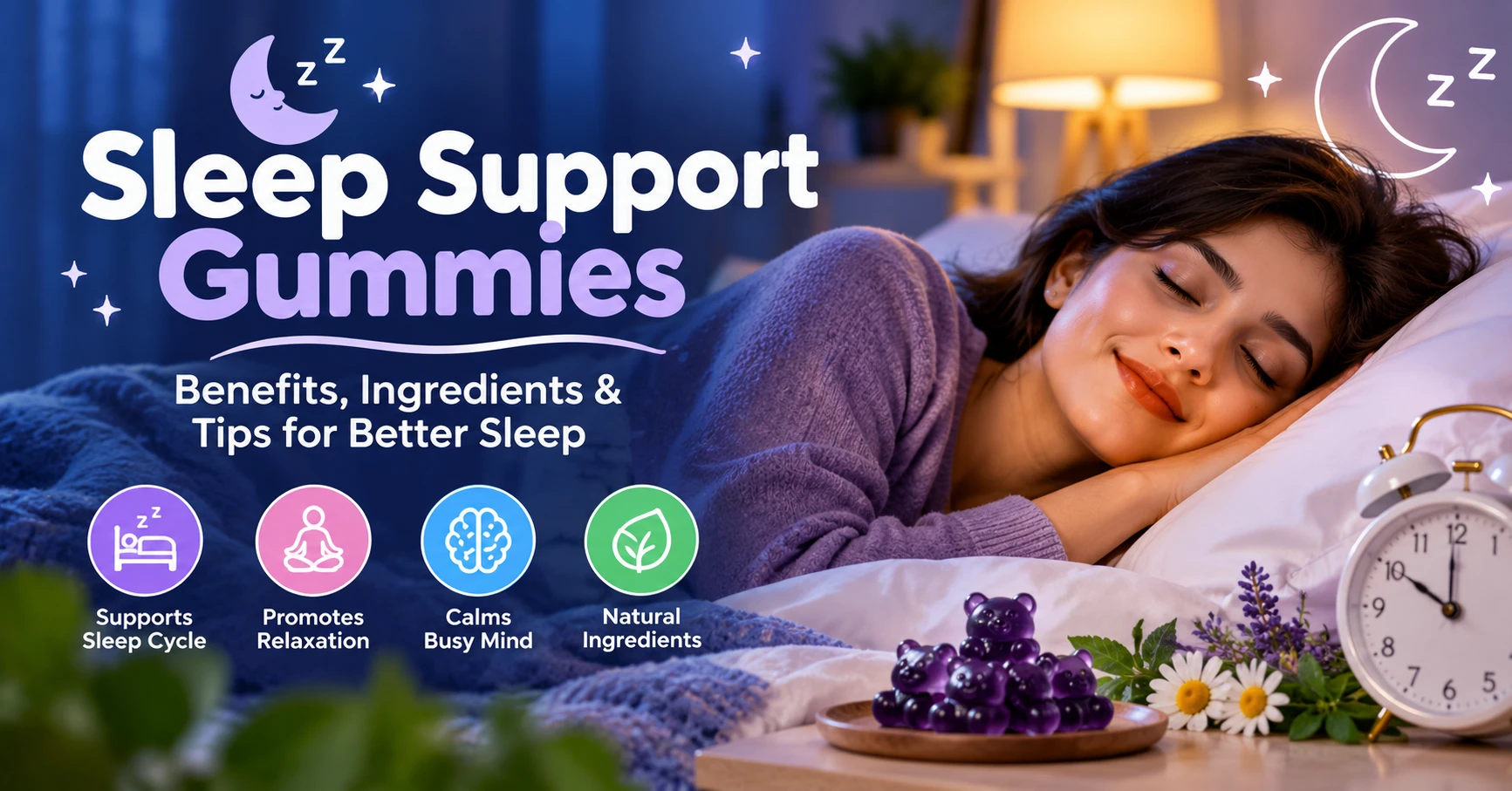
Sleep Support Gummies: Benefits, Ingredients, and Tips for Better Sleep
In today’s fast-paced world, getting a good night's sleep can sometimes feel like a challenge. Late-night screen time, stressful workdays, irregular schedules, and constant notifications can make it difficult to relax when bedtime arrives.
You might feel physically tired but still find yourself lying awake, thinking about tomorrow’s responsibilities. Or perhaps you fall asleep easily but struggle to wake up feeling refreshed.
Sleep is an essential part of overall well-being. It supports normal brain function, mood regulation, physical recovery, and everyday performance. That is why developing healthy sleep habits has become an important part of modern wellness routines.
One option that has gained attention is sleep support gummies. These chewable supplements may contain ingredients such as melatonin, botanical extracts, and vitamins that are commonly used in sleep-support formulations.
But what are sleep support gummies, how do their ingredients work, and what should you know before using them?
Let’s explore the science of sleep and the factors that can help you build a healthier nighttime routine.
Why Is Quality Sleep Important?
Sleep is much more than simply resting after a long day. During sleep, your body and brain carry out several important processes that help maintain normal physical and mental functioning.
Adequate sleep supports:
- Brain function: Sleep plays an important role in learning, memory, and attention.
- Emotional well-being: Healthy sleep habits support mood regulation and stress management.
- Physical recovery: Sleep contributes to the body's normal recovery processes.
- Immune function: Adequate sleep supports normal immune system activity.
- Daily performance: Restful sleep helps support alertness, concentration, and everyday functioning.
For most adults, regularly getting at least seven hours of sleep per night is a useful general target, although individual needs vary.
When sleep becomes irregular or insufficient, everyday activities can feel more demanding. Establishing a consistent bedtime routine is one of the simplest places to start.
What Are Sleep Support Gummies?
Sleep support gummies are chewable dietary supplements formulated with ingredients intended to support relaxation or the body's natural sleep-wake cycle.
Depending on the formulation, these supplements may contain melatonin, selected vitamins, herbal extracts, or a combination of ingredients.
Unlike traditional capsules or tablets, gummies offer a chewable format that some adults find convenient.
However, sleep gummies are not all the same. Their ingredients, dosages, intended use, and potential side effects can vary considerably.
It is important to understand what each ingredient does rather than assuming every sleep gummy works in the same way.
1. Understanding Melatonin and the Sleep-Wake Cycle
Melatonin is a hormone naturally produced by the brain in response to signals associated with darkness. It helps regulate the body's internal sleep-wake timing.
Melatonin supplements are sometimes used for specific sleep-timing difficulties, such as jet lag or certain circadian rhythm disruptions. Their usefulness depends on the reason for the sleep problem, the dose, and the timing of use.
Melatonin is not a universal solution for every sleep issue, and taking more does not necessarily produce better results.
Possible side effects include:
- Daytime sleepiness
- Dizziness
- Headaches
- Nausea
- Changes in alertness
People who take medicines, have underlying health conditions, or need to remain alert for driving or other activities should seek professional advice before using melatonin supplements.
2. Ashwagandha and Relaxation
Ashwagandha is a botanical ingredient traditionally used in Ayurvedic wellness practices. It is often included in supplements designed to support stress management and relaxation.
Some research suggests that particular ashwagandha preparations may help with perceived stress and certain sleep outcomes. However, findings depend on the preparation, dose, study design, and duration of use.
Ashwagandha should not be considered a guaranteed treatment for insomnia or anxiety.
It may also cause side effects and interact with medicines. It is not suitable for everyone, including certain people with thyroid or autoimmune conditions, and it should be avoided during pregnancy unless a qualified healthcare professional advises otherwise.
Anyone considering an ashwagandha-containing supplement should review its suitability with a healthcare professional.
3. Valerian Root and Traditional Sleep Support
Valerian root is a botanical ingredient that has traditionally been used in products intended to support relaxation and sleep.
Research into valerian for sleep difficulties has produced mixed results. There is not enough consistent evidence to conclude that it reliably improves sleep for everyone.
Possible side effects include digestive discomfort, dizziness, and drowsiness.
Valerian may also interact with alcohol, sedatives, and other medicines that cause sleepiness. Avoid combining these substances without professional guidance.
4. Chamomile and a Calming Bedtime Routine
Chamomile is commonly consumed as an herbal tea and is associated with calming bedtime rituals.
Some people find a warm, caffeine-free drink relaxing before bed. However, evidence that chamomile supplements independently improve sleep remains limited.
Chamomile may cause allergic reactions, particularly in people sensitive to plants in the daisy family. Supplement users should also consider potential medicine interactions.
The calming experience of a bedtime ritual can be valuable, but it should not be confused with a guaranteed sleep treatment.
5. Passion Flower and Brahmi
Passion flower and Brahmi are botanical ingredients found in some traditional wellness formulations.
Passion flower has been studied for its potential effects on relaxation and anxiety, but the evidence for improving sleep remains limited.
Brahmi, often referring to Bacopa monnieri in supplement products, is traditionally associated with cognitive wellness. Evidence supporting its use specifically for sleep is not conclusive.
The effects of these ingredients depend on their identity, preparation, dose, and the individual's circumstances.
When evaluating a supplement containing several botanical extracts, consider the full ingredient list, possible interactions, and quality of the available evidence rather than relying on ingredient names alone.
6. Vitamin B6 and Normal Nervous System Function
Vitamin B6 is an essential nutrient involved in several normal bodily functions, including protein metabolism, neurotransmitter synthesis, and nervous system function.
Some sleep-support supplements include vitamin B6 as part of a broader formulation.
However, vitamin B6 should not be viewed as a guaranteed sleep aid. Taking additional amounts does not necessarily improve sleep if a person already receives enough through their diet.
Excessive vitamin B6 intake over time can cause nerve damage. If you use multiple supplements, check their combined vitamin B6 content and follow professional guidance.
Common Reasons People Struggle to Sleep
Before choosing a supplement, it helps to understand the factors that may be affecting your sleep.
Irregular Sleep Schedules
Going to bed and waking up at very different times can disrupt the body's internal clock.
Stress and Overthinking
Work responsibilities, academic pressure, financial concerns, and personal worries can make it difficult to relax at bedtime.
Excessive Screen Time
Bright light from phones, tablets, and computers at night can interfere with normal sleep timing, particularly when screen use delays bedtime.
Caffeine Consumption
Coffee, tea, energy drinks, and other caffeine-containing products can interfere with sleep, especially when consumed later in the day.
Uncomfortable Sleep Environments
Noise, excessive light, an uncomfortable temperature, or an unsuitable mattress can make it harder to sleep well.
Underlying Health Conditions
Persistent sleep problems can sometimes be associated with conditions such as sleep apnoea, chronic pain, restless legs syndrome, anxiety, or other medical issues.
If sleep difficulties continue, it is worth discussing them with a healthcare professional instead of relying only on supplements.
7. Natural Ways to Build a Better Sleep Routine
Healthy sleep habits are an important starting point for improving sleep quality.
Maintain a Consistent Schedule
Try to go to bed and wake up at approximately the same time every day, including weekends.
Reduce Screen Use Before Bed
Set aside some time before bedtime to step away from phones, computers, and other stimulating activities.
Create a Comfortable Bedroom
Keep your bedroom dark, quiet, and comfortably cool. Choose bedding that helps you feel comfortable throughout the night.
Limit Late-Day Caffeine
Pay attention to how caffeine affects you and consider avoiding it for several hours before bedtime.
Get Regular Physical Activity
Regular exercise supports overall health and may help with sleep. If vigorous exercise close to bedtime makes you feel more alert, try moving it earlier.
Develop a Relaxing Evening Ritual
Reading, gentle stretching, breathing exercises, or listening to calming music can help you transition from daytime activities to bedtime.
Avoid Heavy Meals and Alcohol Near Bedtime
Large meals close to bedtime may cause discomfort. Alcohol can also disrupt sleep quality, even when it initially makes you feel sleepy.
These habits can support better sleep, although persistent insomnia may require a more structured approach such as cognitive behavioural therapy for insomnia (CBT-I).
Sleep Support Gummies vs Traditional Tablets
Sleep supplements are available in several formats. Gummies and tablets may differ in convenience and ingredients, but the delivery format alone does not determine effectiveness.
| Feature | Sleep Support Gummies | Traditional Tablets |
|---|---|---|
| Format | Chewable | Usually swallowed |
| Convenience | May suit people who prefer gummies | May suit people who prefer tablets |
| Ingredients | Varies by formulation | Varies by formulation |
| Dosage | Must follow the product label | Must follow the product label |
| Sugar content | May contain sugar or alternative sweeteners | Varies by formulation |
| Effectiveness | Depends on ingredients and dose | Depends on ingredients and dose |
| Safety | Requires attention to interactions and dosage | Requires attention to interactions and dosage |
Neither format is automatically more effective. The ingredients, dose, quality, and suitability for the individual matter more than whether the supplement is a gummy or tablet.
What Should You Check Before Choosing Sleep Gummies?
If you are considering a sleep-support supplement, review these factors carefully.
Ingredient Transparency
Look for clearly identified ingredients and their amounts per serving.
Appropriate Dosage
Check the amount of melatonin, vitamins, and botanical extracts. Avoid assuming that higher doses will work better.
Quality Standards
Choose products from reputable manufacturers with clear labelling and appropriate quality controls.
Potential Interactions
Ingredients such as melatonin, valerian, and ashwagandha may be unsuitable for some people or may interact with medicines.
Sugar and Other Ingredients
Review the nutrition information, sweeteners, allergens, and other ingredients rather than relying on marketing descriptions alone.
Professional Guidance
Speak with a qualified healthcare professional if you take medication, have a medical condition, are pregnant or breastfeeding, or experience persistent sleep problems.
Frequently Asked Questions About Sleep Support Gummies
1. What are sleep support gummies used for?
They are dietary supplements formulated with ingredients intended to support relaxation or the body's natural sleep-wake cycle. Their effects depend on the ingredients and the individual's circumstances.
2. Do sleep support gummies work immediately?
Effects vary according to the formulation, ingredient, dose, and reason for sleep difficulties. No supplement can guarantee that you will fall asleep within a particular number of minutes.
3. Is melatonin the same as a sleeping pill?
No. Melatonin is a hormone involved in regulating sleep-wake timing. It differs from many prescription sleep medicines in its mechanism and uses, although it can still cause side effects and interact with medicines.
4. Can I take sleep gummies every night?
That depends on the ingredients, dose, duration, and your health circumstances. Regular use, particularly of melatonin-containing products, should be discussed with a healthcare professional when appropriate.
5. Can I combine sleep gummies with alcohol?
Combining sleep-support supplements with alcohol may increase drowsiness or other unwanted effects, especially when the formulation contains melatonin or sedating botanical ingredients. Avoid combining them unless a qualified healthcare professional confirms it is appropriate.
6. Are sugar-free sleep gummies better?
Sugar-free formulations may suit people who prefer to limit sugar intake, but sugar content alone does not determine safety or effectiveness. Check the full ingredient list and nutrition information.
7. When should I seek medical advice for sleep problems?
Seek professional advice if sleep difficulties persist, regularly affect your daily activities, or are accompanied by symptoms such as loud snoring, breathing interruptions, or severe daytime sleepiness.
Final Thoughts
Good sleep is an important foundation of overall wellness. It supports normal brain function, mood, physical recovery, and everyday performance.
Although sleep support gummies have become a convenient supplement option, they are not a replacement for healthy sleep habits or appropriate medical care. Ingredients such as melatonin, ashwagandha, valerian root, chamomile, passion flower, Brahmi, and vitamin B6 have different roles, levels of scientific evidence, and safety considerations.
The most useful approach is to understand what is affecting your sleep, develop a consistent bedtime routine, and choose supplements carefully when they are appropriate for your needs.
Better sleep begins with informed choices, consistent habits, and giving your body the rest it needs.
Disclaimer: This article is for general educational purposes only and is not a substitute for medical advice. Dietary supplements are not intended to diagnose, treat, cure, or prevent any disease. Consult a qualified healthcare professional before using sleep-support supplements, especially if you take medicines, have an underlying health condition, or are pregnant or breastfeeding.
Related Tags
Medical Disclaimer: The content provided in this article is for informational purposes only and is not intended as medical advice, diagnosis, or treatment. Always consult with a qualified healthcare provider or doctor regarding any dietary or supplement decisions.